Summary
- Abu Simbel Temples are two monumental rock-cut temples built by Ramesses II in the 13th century BC, near Egypt’s ancient Nubian frontier.
- The complex includes the Great Temple of Ramesses II, dedicated to Amun, Ra-Horakhty, Ptah, and the deified king, and the Small Temple, dedicated to Hathor and Queen Nefertari.
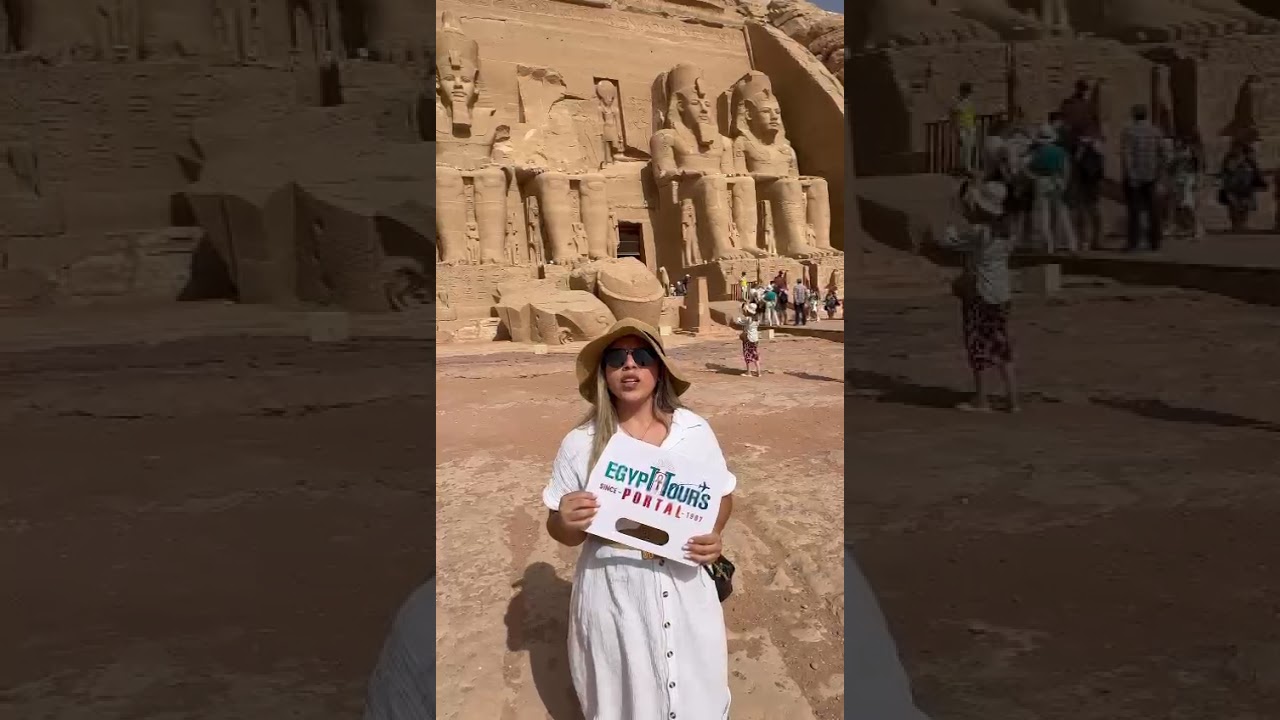
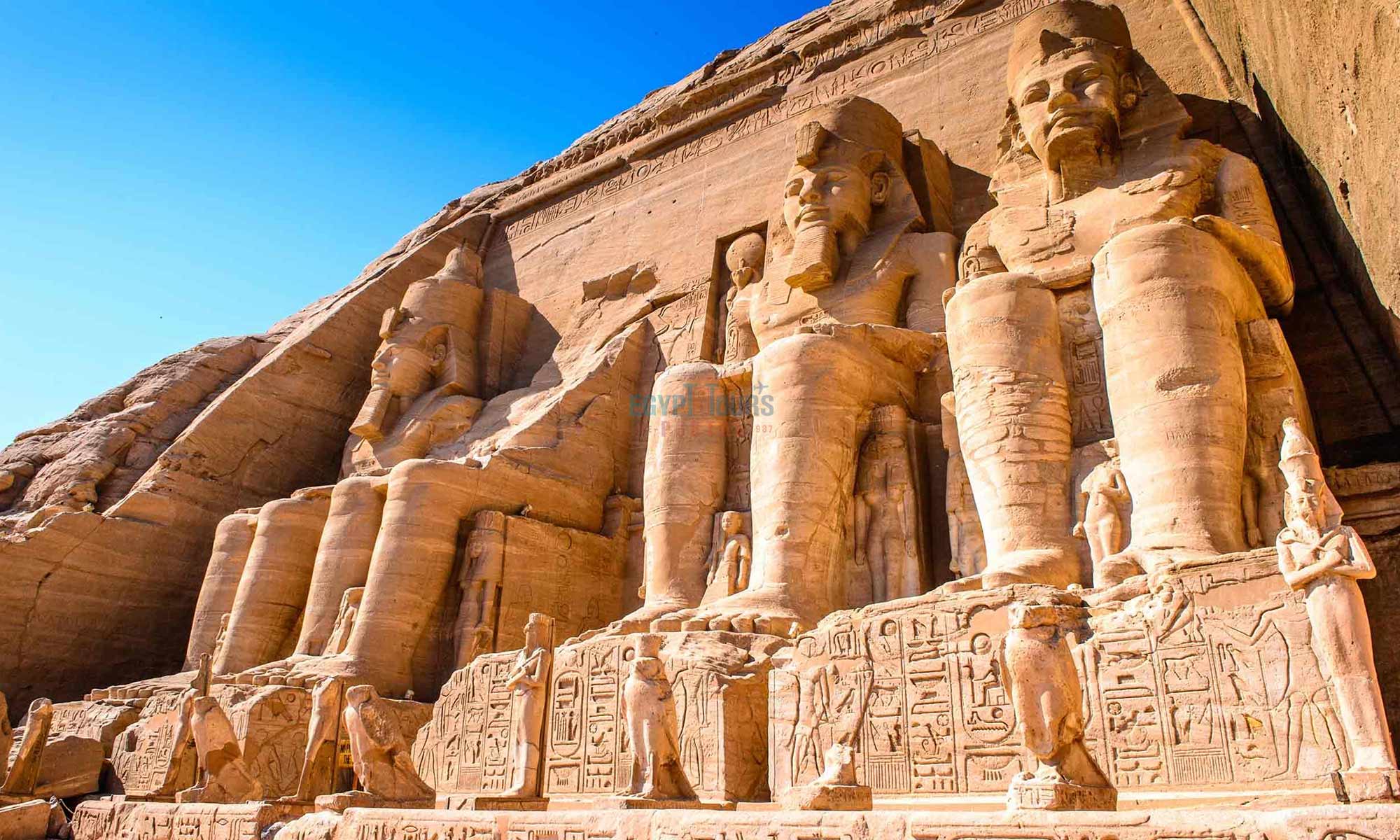
- The Great Temple is famous for its four colossal seated statues of Ramesses II, each about 20 meters high, and its reliefs celebrating the Battle of Kadesh.
- Abu Simbel was rediscovered in 1813 by Johann Ludwig Burckhardt, entered by Giovanni Belzoni in 1817, documented by major explorers, artists, and photographers, and later cleared and preserved.
- The temples were relocated in 1968 to save them from Lake Nasser after the Aswan High Dam, and remain famous for the Sun Festival on February 22 and October 22.
Abu Simbel looks to be out of this world or even exists in our realm, for ages the Abu Simbel temples have stood as a holy guardian and a living proof of the eternal glory and pride of the ancient Egyptians. The Abu Simbel temples were a celestial solar miracle that enlightened every single soul that put their eyes on it, with a grand vision of ancient definitions of beauty, greatness, and bliss.
The Abu Simbel Temples are among the most iconic monuments & temples of ancient Egypt and one of the greatest masterpieces of rock-cut architecture in the world. The site consists of two massive temples carved directly into the mountainside during the reign of King Ramesses II of the 19th Dynasty, in the 13th century BC, in southern Egypt near the Nubian border. The temples were designed to project the power of Egypt, glorify Ramesses II, honor the gods, and celebrate royal authority at one of the most strategic frontiers of the ancient Egyptian empire.
Abu Simbel is often considered one of Egypt’s most famous historical sites after the Giza Pyramids. Its colossal facade, especially the four seated statues of Ramesses II at the Great Temple, has become one of the most recognizable images of ancient Egypt. The temples are also famous for their extraordinary solar alignment, where sunlight reaches the inner sanctuary twice a year, and for their modern relocation in the 1960s, when the entire complex was moved to save it from the rising waters of Lake Nasser after the construction of the Aswan High Dam.
Abu Simbel earned its title as part of the UNESCO World Heritage Site known as “Nubian Monuments from Abu Simbel to Philae.” It represents not only the genius of ancient Egyptian architecture and ancient Egyptian astronomy, but also one of the greatest international rescue operations in archaeological history.
Where Is Abu Simbel Located and How to Get to It?
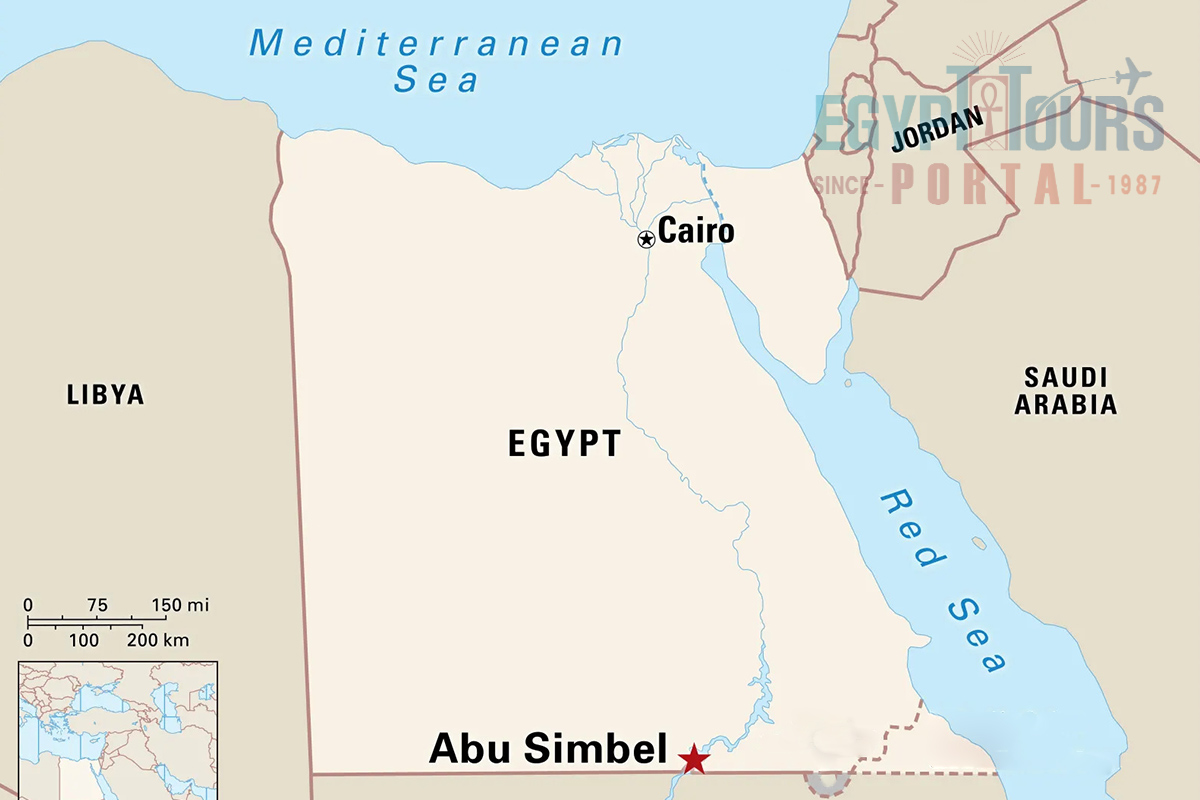
The Abu Simbel Temples are located in the village of Abu Simbel, in Aswan Governorate in upper Egypt, near the modern border with Sudan. The complex is located on the western bank of Lake Nasser, about 230 km / 140 miles southwest of Aswan in a direct line, or around 300 km / 190 miles by road. It lies at approximately 22°20′13″N latitude / 22.3369°N, placing it about 122 km / 75.8 miles south of the Tropic of Cancer. Its position near the ancient Nubian frontier made it highly symbolic, as it marked the southern power zone of Egypt during the New Kingdom (1570–1070 BCE).
Travelers on their Egypt tour including Abu Simbel, can reach the temple mainly by road, flight, or Lake Nasser cruise. The most common method is a road trip from Aswan, which usually takes several hours each way. Many visitors join an early-morning convoy or organized tour from Aswan to arrive before the midday heat. Another convenient option is flying from Aswan to Abu Simbel Airport, located about 2 km from the town, with a flight time of around 30 minutes. Abu Simbel Airport was first developed to support tourism after the temples’ relocation and has a runway originally built for tourist aircraft.
A more atmospheric way to visit is through a Lake Nasser cruise, where ships can moor near the temples, allowing travelers to experience Abu Simbel by moonlight, sunrise, or early morning light. This approach gives the site a dramatic sense of isolation and grandeur, close to how the temples were meant to impress anyone approaching Egypt’s southern frontier.
Explore the Glorious History of Abu Simbel Temples
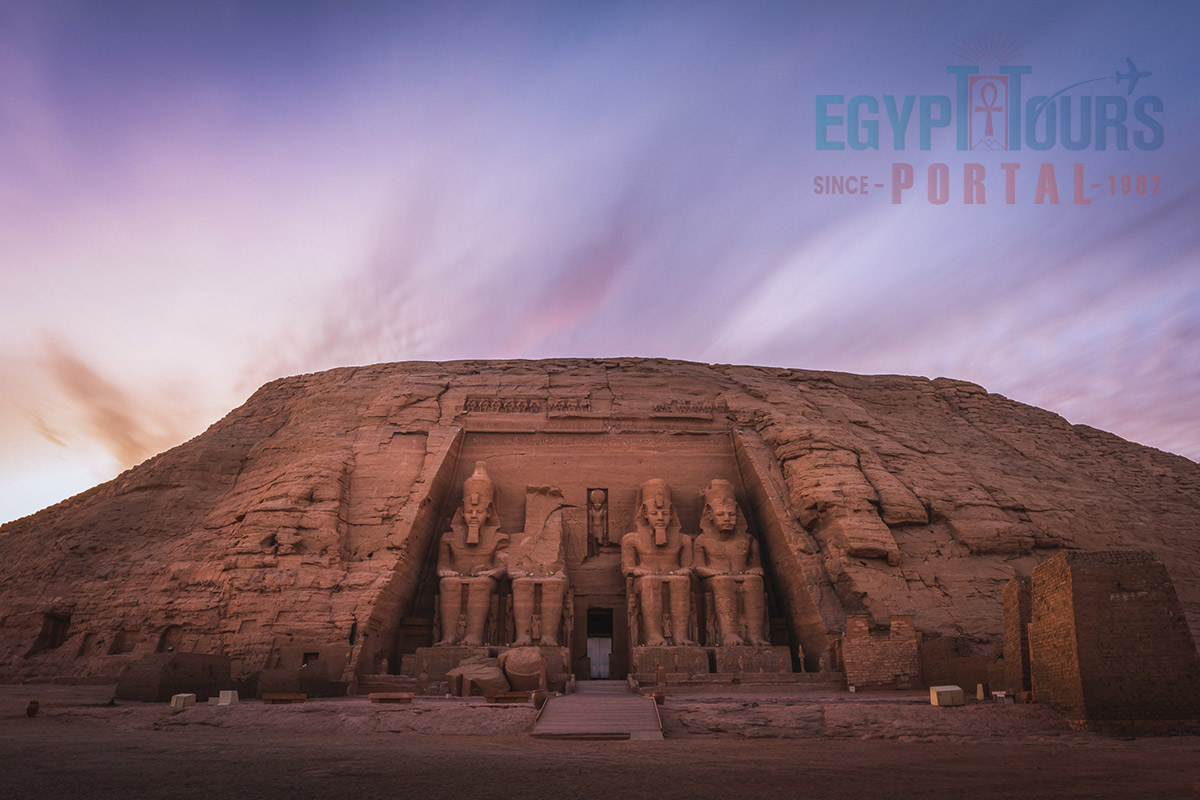
The history of Abu Simbel begins during the reign of Ramesses II (1279-1213 BCE), one of the most powerful pharaohs of ancient Egypt. During his long rule, Ramesses II launched a vast building program across Egypt and Nubia, creating temples, statues, and monuments that reinforced his divine kingship and imperial power. Nubia was extremely important to Egypt because it supplied gold and valuable trade goods, so Ramesses built grand temples there to display Egypt’s authority and encourage the Egyptianization of Nubia.
The Abu Simbel complex was begun around 1264 BC and took about 20 years to complete, ending around 1244 BC. The site was known as the “Temple of Ramesses, Beloved by Amun.” It was carved near the Second Nile Cataract, close to the border between Lower Nubia and Upper Nubia, making it a monumental statement of Egyptian dominance at the empire’s southern edge.
The Great Temple was dedicated to these ancient Egyptian gods: Amun, Ra-Horakhty, Ptah, and the deified Ramesses II himself, while the Small Temple was dedicated to the goddess Hathor and Ramesses’ beloved queen Nefertari. The Great Temple’s reliefs, especially those showing the Battle of Kadesh, celebrated Ramesses II as a heroic warrior king. The Small Temple honored Nefertari in a rare and remarkable way, giving her statues nearly the same scale as the king’s, which was unusual in royal ancient Egyptian art traditions.
Over time, the temples fell out of use and were gradually buried by desert sand. By the 6th century BC, sand had already covered parts of the Great Temple’s statues up to their knees, and the site remained largely hidden from European awareness until the 19th century.
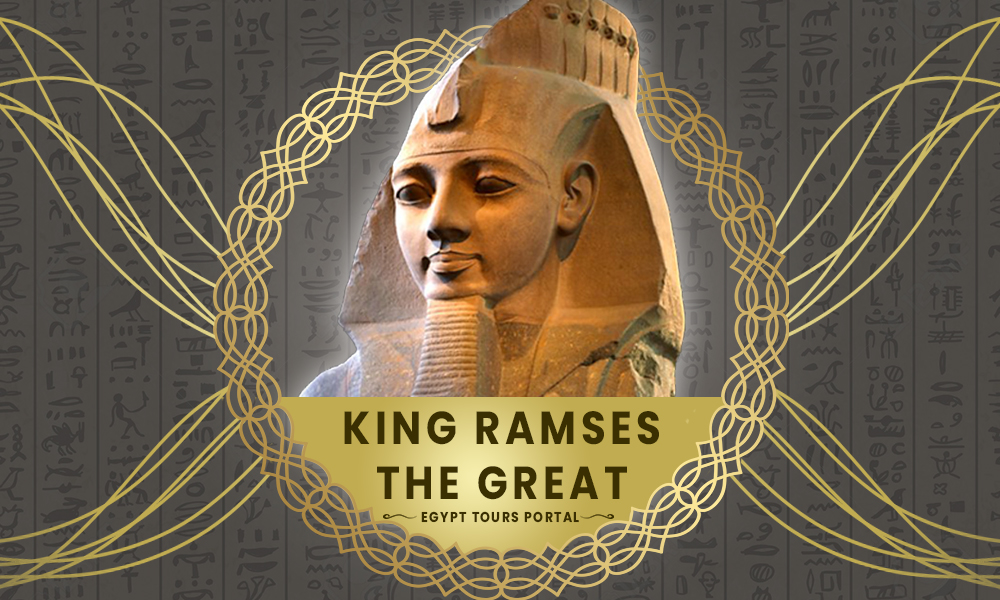
Ramses the Great: The Full Story of Egypt's Most Powerful Pharaoh
Discover the incredible Legacy of Ramesses the Great
What Does the Abu Simbel Temples Complex Consist Of?
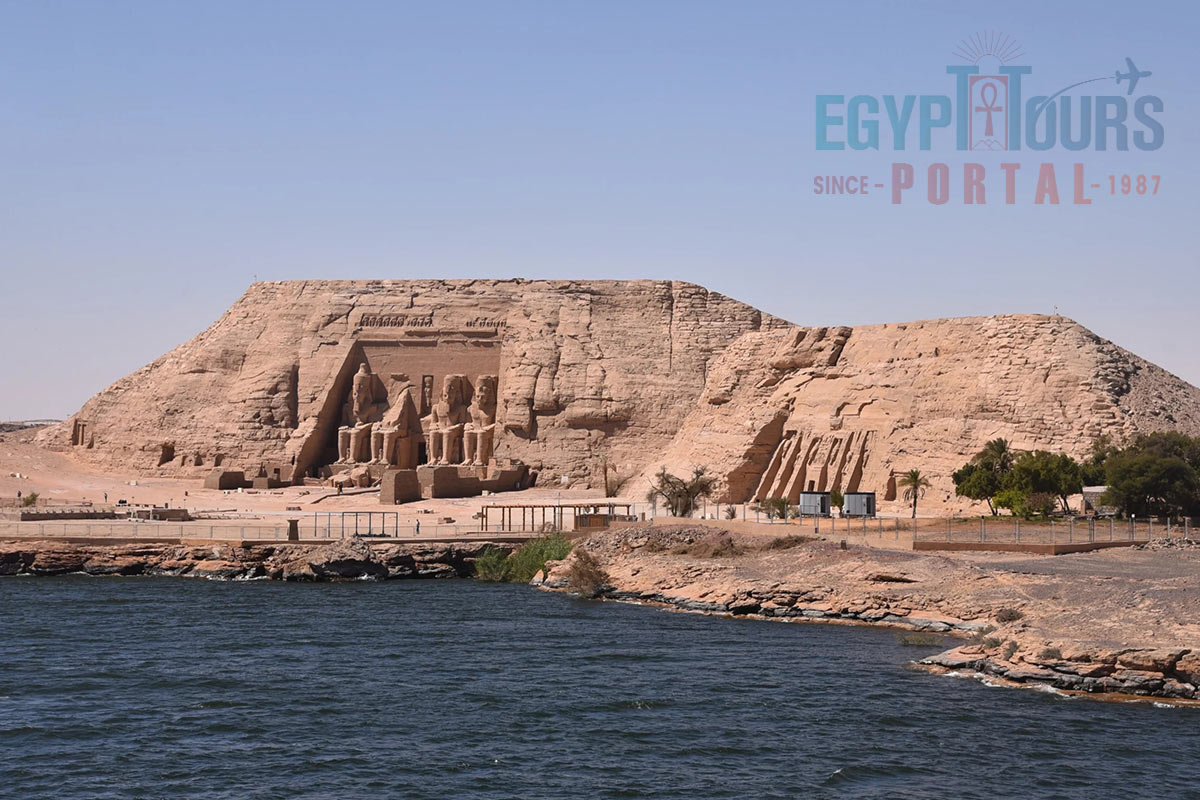
The Abu Simbel Complex is a living miracle and true embodiment that showcases a golden glimpse of the times when Egypt was at its most powerful state. The structures and interior of the Abu Simbel Temples highlight a great deal about the architectural prowess and spiritual ingenuity of the ancient Egyptians.
The Abu Simbel complex consists of two rock-cut temples that are now open to the public. The larger temple is dedicated to Ra-Horakhty, Ptah, and Amun, the three major state deities of Ramesses II’s time, and also honors the deified Ramesses II himself. Its facade is famous for the four colossal statues of the king. The smaller temple is dedicated to the goddess Hathor, who is closely associated with and personified by Queen Nefertari, Ramesses II’s most beloved wife.
The Great Temple of Ramesses II
The Great Temple of Abu Simbel took about 20 years to build and was completed around the 24th year of Ramesses II’s reign, corresponding to about 1265 BC. It was dedicated to Amun, Ra-Horakhty, Ptah, and the deified Ramesses himself. It is widely regarded as the grandest and most beautiful temple commissioned by Ramesses II and one of the most impressive temples in Egypt.
The Grand Entrance and Facade of the Great Temple
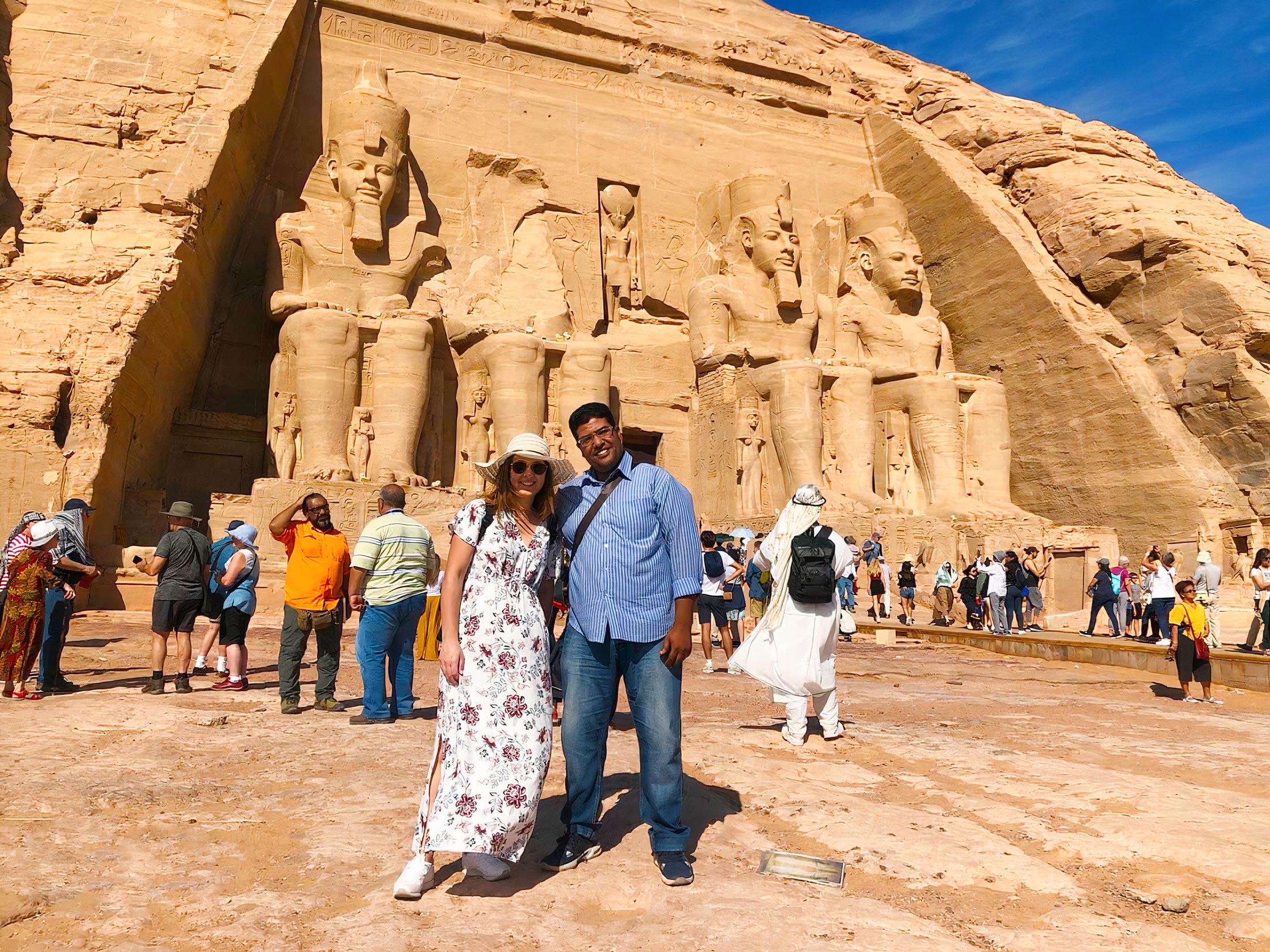
The Great Temple has a single entrance flanked by four seated colossal statues of Ramesses II, each about 20 m / 66 ft high, showing the king wearing the double crown of Upper and Lower Egypt. The colossus immediately left of the entrance was damaged by an earthquake shortly after construction, causing its head and torso to fall; during the modern relocation, these fallen pieces were left at the statue’s feet in their original found position rather than restored.
Around Ramesses’ legs are smaller statues, none taller than the pharaoh’s knees, representing Queen Nefertari Meritmut, his mother Mut-Tuy, his first two sons Amun-her-khepeshef and Ramesses B, and his first six daughters: Baketmut, Bintanath, Nefertari, Nebettawy, Meritamen, and Isetnofret.
The façade behind the colossi measures 33 m / 108 ft high and 38 m / 125 ft wide. It includes a frieze of twenty-two baboons raising their arms in worship of the rising sun, and a stele recording Ramesses II’s marriage to a daughter of the Hittite king Ḫattušili III, which sealed peace between Egypt and the Hittites. Above the doorway are reliefs of Ramesses worshipping Ra-Horakhty, who stands in a niche. Ra-Horakhty holds the hieroglyph "user" and a feather, with Maat, goddess of truth and justice, in his left hand, forming a cryptogram of Ramesses II’s throne name, User-Maat-Re.
The Magical Interior of the Great Temple
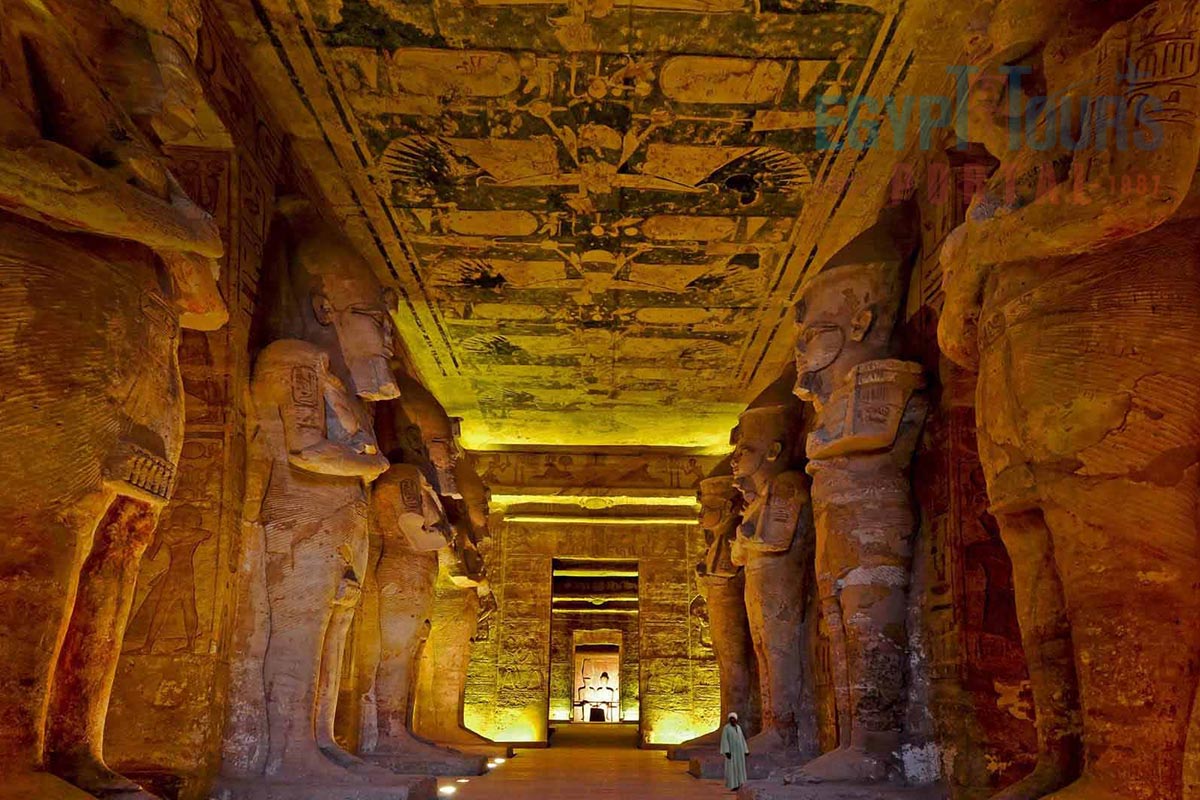
The interior follows the typical triangular layout of ancient Egyptian temples, with rooms becoming smaller as they move from the entrance toward the sanctuary. The temple is also unusual because of its many side chambers. The hypostyle hall, or pronaos, measures 18 m / 59 ft long and 16.7 m / 55 ft wide and is supported by eight huge Osirid pillars showing the deified Ramesses connected with Osiris, god of fertility, agriculture, resurrection, the afterlife, and eternal life, symbolizing the everlasting nature of the pharaoh. The statues on the left wall wear the white crown of Upper Egypt, while those on the opposite side wear the double crown.
The walls of the pronaos are decorated with military scenes from Ramesses II’s campaigns. The most important reliefs focus on the Battle of Kadesh on the Orontes River in present-day Syria, where Ramesses fought the Hittites. The most famous image shows the king in his chariot shooting arrows at fleeing enemies being taken prisoner. Other reliefs show Egyptian victories in Libya and Nubia.
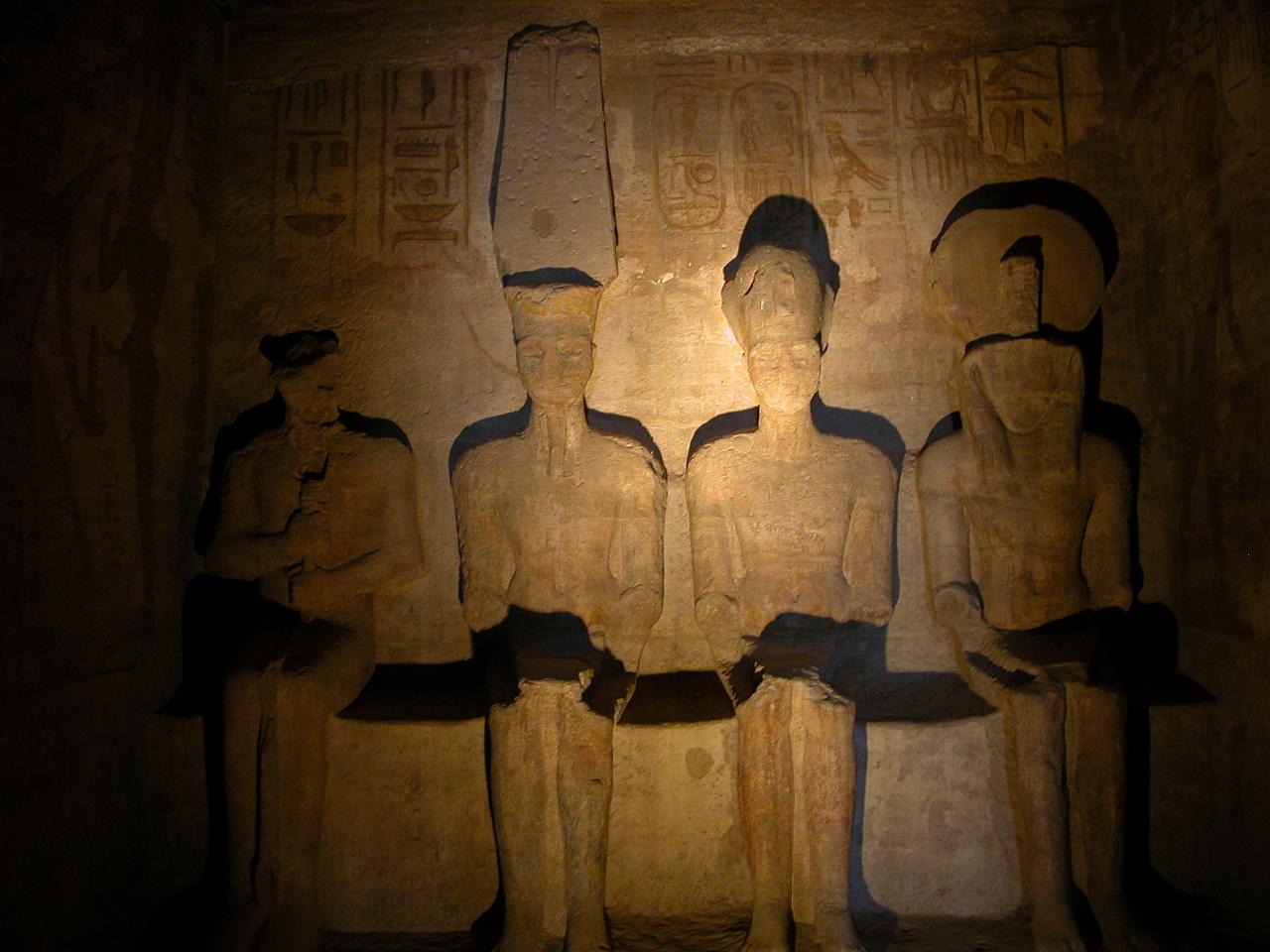
From the hypostyle hall, visitors enter a second pillared hall with four pillars decorated with offering scenes to the gods, including depictions of Ramesses and Nefertari with the sacred boats of Amun and Ra-Horakhty. This leads to a transverse vestibule and then the sanctuary, where four seated rock-cut figures appear on a black wall: Ra-Horakhty, the deified Ramesses II, Amun-Ra, and Ptah, whose main cult centers were Heliopolis, Thebes, and Memphis.
The Celestial Solar Alignment of Abu Simbel
The Great Temple was carefully aligned so that on October 22 and February 22, sunlight enters the sanctuary and illuminates the sculptures on the back wall, except for Ptah, the god associated with the realm of the dead, who remains in darkness. These dates are traditionally linked to Ramesses II’s birthday and coronation day, although there is no direct evidence confirming this exact interpretation.
Some calculations based on the heliacal rising of Sirius / Sothis and archaeological inscriptions suggest October 22 may have been the original significant date. The solar event symbolically renewed the deified Ramesses through the energy of the sun, allowing him to take his place beside Amun-Ra and Ra-Horakhty.
Because of the movement of the Tropic of Cancer caused by Earth’s axial precession over three millennia, the original ancient date of the event may have been different. The modern relocation of the temple also means the current alignment may not be exactly identical to the original. The phenomenon was first reported by Amelia Edwards in 1874, who described a beam of sunlight entering the temple, piercing the inner darkness, reaching the sanctuary, and falling like fire from heaven before the gods.
The Unique Greek Graffito at Abu Simbel
A Greek inscription was carved on the left leg of a seated Ramesses II colossus on the south side of the Great Temple entrance. It records that when King Psammetichus / Psamtik II came to Elephantine, the inscription was written by men who sailed with Psammetichus son of Theocles and reached beyond Kerkis as far as the river allowed. It also notes that foreign-language speakers, including Greeks and Carians, were led by Potasimto, while the Egyptians were led by Amasis. Kerkis was near the Fifth Cataract, deep inside the Cushite Kingdom.
The Captivating Small Temple of Hathor and Nefertari
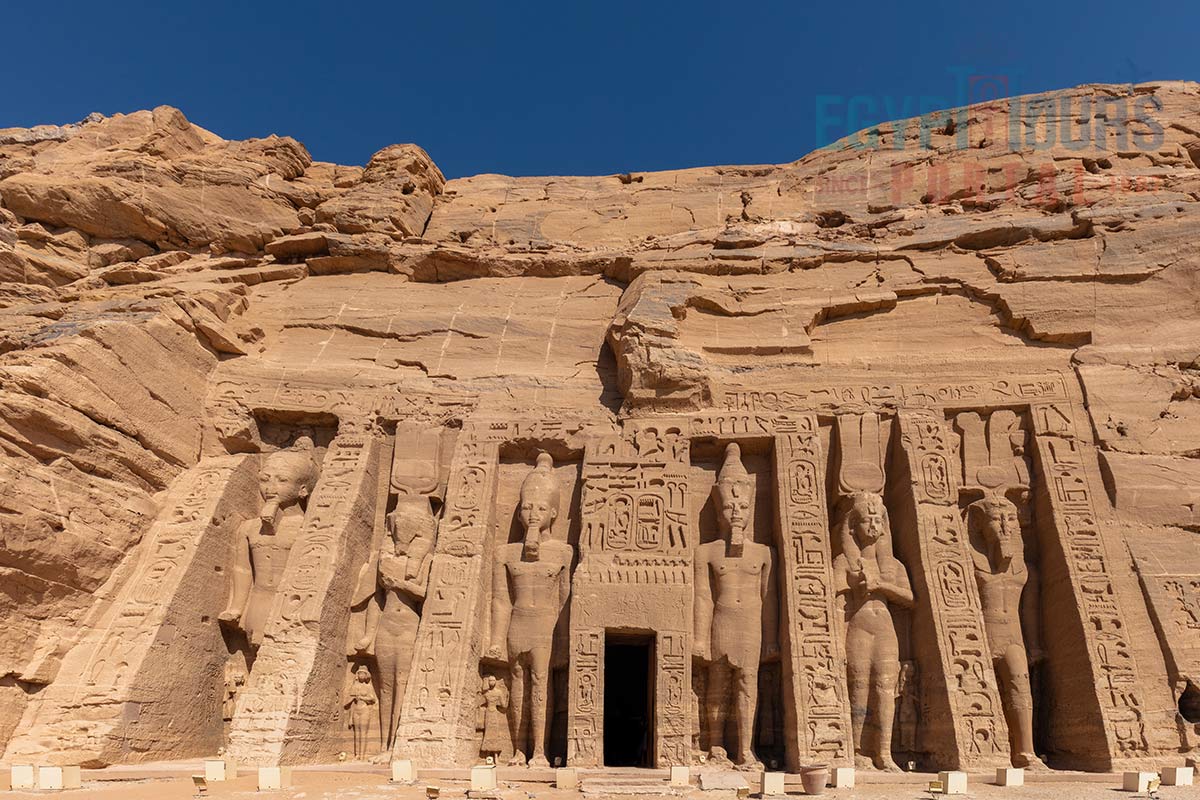
The Small Temple, also called the Temple of Hathor and Nefertari, was built about 100 m / 330 ft northeast of the Great Temple. It was dedicated to Hathor and Queen Nefertari, Ramesses II’s chief consort. This was only the second known time in ancient Egyptian history that a temple was dedicated to a queen, the first being Akhenaten’s temple for Nefertiti.
Its rock-cut facade is decorated with two groups of colossi separated by a large gateway. The statues, slightly over 10 m / 33 ft high, represent Ramesses II and Nefertari. On either side of the portal are two statues of the king, one wearing the white crown of Upper Egypt and the other wearing the double crown, each flanked by statues of the queen.
A remarkable feature of the Small Temple is that the statues of Ramesses II and Nefertari are shown at equal size, one of the very rare cases in Egyptian art where a queen is represented on the same scale as the pharaoh. Normally, queens were shown beside the king but no taller than his knees.
Small statues of princes and princesses appear beside their parents, arranged symmetrically. On the south side are princes Meryatum and Meryre, princesses Meritamen and Henuttawy, and princes Pareherwenemef and Amun-her-khepeshef; on the north side, the same figures appear in reverse order.
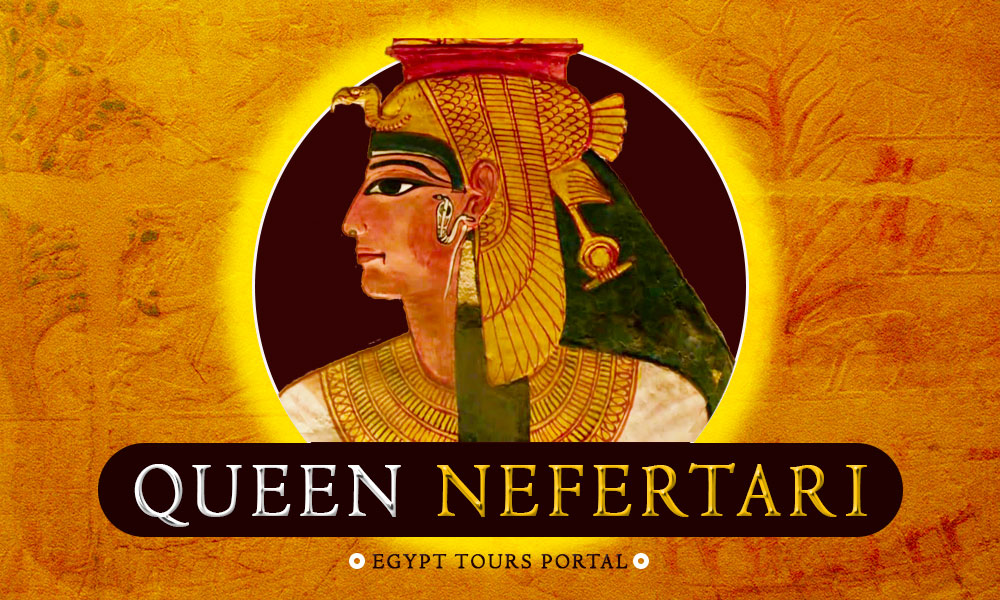
Queen Nefertari: The Life, Legacy, Tomb, and Timeless Power of Egypt’s Beloved Queen
Explore the Epic Love Between Ramesses the Great and Nefertari
The Majestic Interior of the Small Temple
The Small Temple has a simplified version of the Great Temple’s plan. Its hypostyle hall is supported by six pillars, but unlike the Great Temple, these are not Osirid pillars. Instead, they are decorated with scenes of Nefertari playing the sistrum, a sacred instrument of Hathor, alongside gods such as Horus, Khnum, Khonsu, and Thoth, and goddesses including Hathor, Isis, Maat, Mut of Asher, Satis, and Taweret. In one scene, Ramesses presents flowers or burns incense. The pillar capitals show the face of Hathor, forming what are known as Hathoric columns.
The wall reliefs show the deification of the king, the destruction of enemies in the north and south with Nefertari beside him, and the queen making offerings to Hathor and Mut. The hypostyle hall leads to a vestibule entered through three large doors. On the north and south walls are graceful reliefs of Ramesses and Nefertari presenting papyrus plants to Hathor, shown as a cow on a boat in a papyrus thicket.
On the west wall, Ramesses II and Nefertari make offerings to Horus and the cataract deities Satis, Anubis, and Khnum. The rock-cut sanctuary and two side chambers connect to the transverse vestibule and align with the temple axis. In the sanctuary, offering scenes are shown on the side walls, while the back wall contains a niche where Hathor as a divine cow, appears to emerge from the mountain, symbolizing her as the mistress of the temple and her deep connection with Queen Nefertari.
The Legendary Rediscovery of Abu Simbel Temples
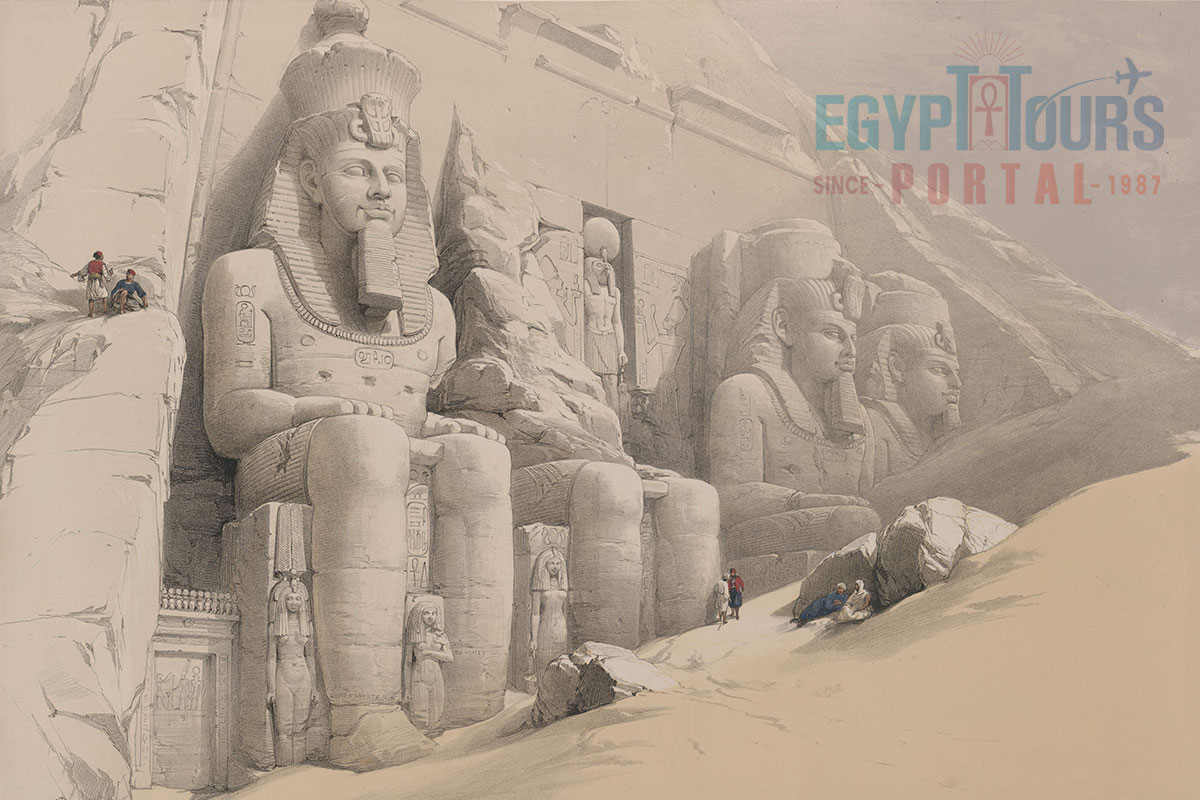
The Abu Simbel Temples gradually fell into disuse and were buried by drifting desert sand, with the Great Temple reportedly covered up to the knees of its statues by the 6th century BC. The site remained unknown to Europeans until March 1813, when Swiss explorer Johann Ludwig Burckhardt discovered the Small Temple and the upper frieze of the Great Temple, describing the rock-cut monuments, the six colossal standing figures of the smaller temple, and the partly buried four colossi of the Great Temple.
In 1815, William John Bankes visited but could not enter the Great Temple, while in 1816, Bernardino Drovetti attempted excavation unsuccessfully. Later that year, Giovanni Belzoni arrived, convinced the local sheikh of the value of coins, paid workers two piastres per day, and exposed parts of the Great Temple before stopping due to lack of food and funds.
With support from Henry Salt, Belzoni returned in June 1817 with a small team, and after 22 days of work, entered the Great Temple on 1 August 1817; Giovanni Finati was the first to squeeze through the opening and described the interior as hot, humid, and almost like a Turkish bath.
Enlightening Documentation by Bankes, Gau, and Champollion
In 1819, William John Bankes returned with Henry Salt, Henry William Beechey, Giovanni Finati, and a larger scholarly team including Alessandro Ricci, Louis Maurice Adolphe Linant de Bellefonds, Jean-Nicolas Huyot, and Baron Albert von Sack to document the temples, identify the façade statues, and search for inscriptions.
They stayed from 23 January to 18 February 1819, excavated the southernmost colossus of Ramesses II down to its feet, found graffiti, and cleared enough sand by 27 January to enter the Great Temple, working inside nearly naked because of the heat and using 20 to 50 wax candles for light. Soon after, French architect and archaeologist Franz Christian Gau visited, crawled into the partly blocked Great Temple, struggled with heat and poor light, and later published his research in 1822 in Les antiquités de la Nubie.
Abu Simbel also contributed to the decipherment of hieroglyphs: after Huyot sent drawings to Jean-François Champollion, Champollion examined them on 14 September 1822, connected one cartouche to Ramesses and another to Thutmose, helping him realize that hieroglyphs combined symbolic and phonetic signs.
From 1828 to 1829, Champollion and Ippolito Rosellini led a Franco-Tuscan expedition, reached Abu Simbel on 26 November 1828, spent two weeks clearing the doorway and copying all the reliefs, then removed their sand barrier, allowing sand to cover the entrance again by about 2 meters.
Artists, Travelers, Photographers, and Early Tourism
During the 19th century, Abu Simbel became a major subject for artists, travelers, photographers, and early tourism. In 1838, Scottish painter David Roberts sketched the temples and later published famous lithographs; in 1842, Robert Stewart, Viscount Castlereagh, entered the Great Temple and noted whitewash traces on one colossus, likely from a plaster cast; and in December 1845, English writer Isabella Frances Romer became the first known European woman to visit Abu Simbel, marking the event by carving her name into the throne of the southern colossus.
Photography began early at the site: Maxime Du Camp, commissioned in 1849, reached Abu Simbel with Gustave Flaubert on 27 March 1850, photographed the temples and complex, and returned with 214 photographs, including 10 Abu Simbel calotypes published in 1852 in the first French printed book illustrated with photographs. Other early photographers included Félix Teynard, John Beasley Greene, Francis Frith, Pascal Sébah, and Antonio Beato. In 1873–1874, Amelia Edwards, Lucy Renshaw, and Jenny Lane traveled to Abu Simbel by dahabiyeh; Edwards later published A Thousand Miles up the Nile in 1877.
Their party arrived on 31 January 1874, and on 16 February, painter Andrew McCallum discovered the Chapel of Thoth, then called the South Chapel; after sand was cleared, the group entered it, though Edwards, McCallum, and others inscribed their names inside. The same year, Thomas Cook began a steamer service between Aswan and Wadi Halfa, making Abu Simbel more accessible to tourists.
Protection and Preservation of the Great Temple
Major preservation work began at the end of the 19th century. In December 1892, the Egyptian Department of Public Works identified dangerous overhanging rock above the Great Temple façade that threatened the colossi. At the request of Sir William Willcocks, a 12-man Royal Engineers detachment led by Lieutenant James Henry L’Estrange Johnstone arrived on 6 February 1893.
They removed unstable masses, including a 70-long-ton rock and a cracked overhang of about 650 long tons, working in 107°F / 42°C heat and removing nearly 850 long tons / 860 tonnes of dangerous material without accidents. They used tackle, screw jacks, steel ropes, winches, and explosives sourced from 9-pounder ammunition, then built protective walls, made a hard stone slope, cleared the entrance from 5 April, repaired baboon statues, and cleared debris from the Chapel of Thoth. The project was completed and inspected on 9 April 1893 at less than half the original estimated cost of £1,000.
Permanent Sand Removal and New Discoveries
Between 1909 and 1910, under Alessandro Barsanti, the sand was permanently cleared from the Great Temple facade, forming a wide platform and river steps. This work revealed a row of statues alternating between the pharaoh and the sacred hawk of the sun, plus the previously unknown Chapel of Re-Harakhty. The colossi were stabilized with cement and iron pins, and the Great Temple’s interiors were repaired.
The Grave of Major Benjamin Tidswell
The 1893 work also exposed the grave of Major Benjamin Tidswell, who died at Abu Simbel on 18 June 1885 while serving with the Nile River Expedition’s Heavy Camel Regiment. After flood damage threatened the grave, his remains were reburied on 3 January 1910 south of the façade with a granite tombstone.
Early Access to Abu Simbel
By the early 1950s, Abu Simbel was still remote, with public access limited to a twice-weekly boat between Aswan and Sudan, long before modern roads, flights, and tourism infrastructure made the site easier to reach.
Learn About the Incredible Relocation of Abu Simbel Temples
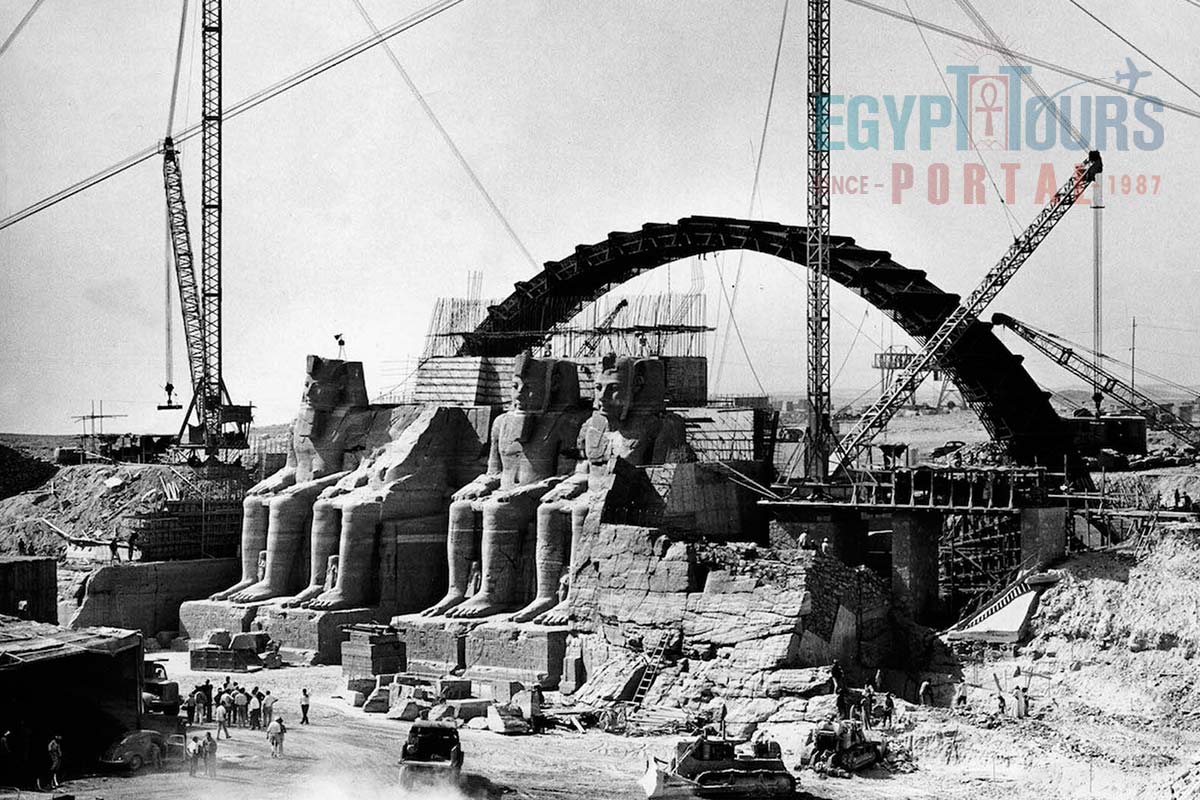
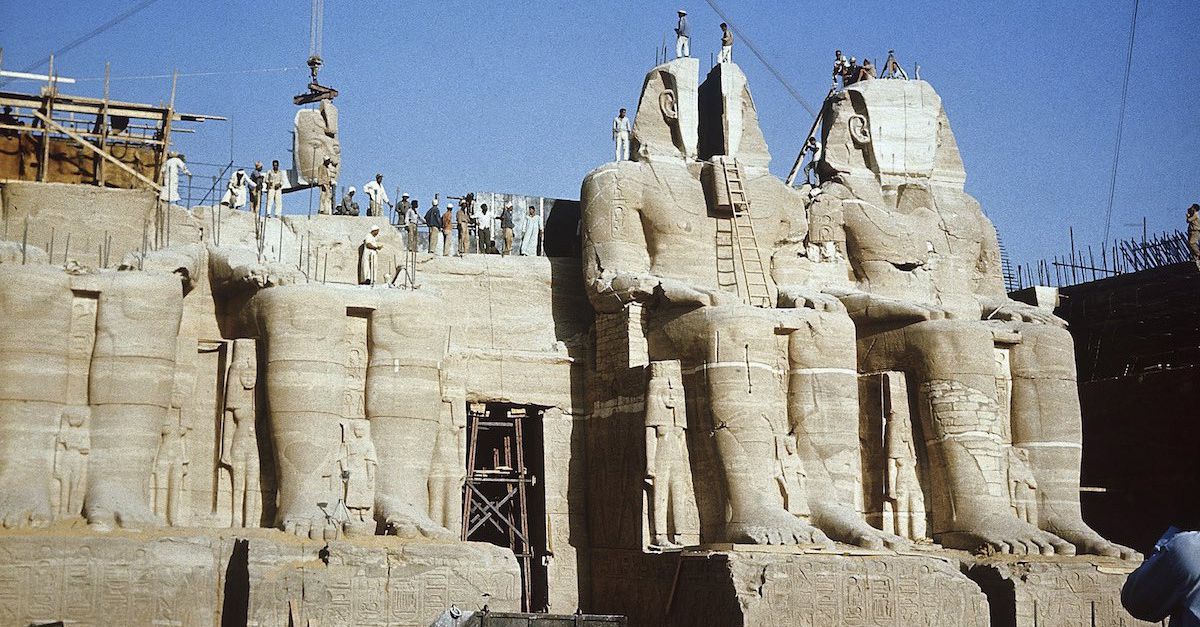
The relocation of Abu Simbel is one of the greatest rescue tales and archaeological engineering projects ever completed. In the 20th century, the construction of the Aswan High Dam created a serious threat to Nubian monuments. The rising waters of Lake Nasser would have submerged Abu Simbel and damaged the sandstone temples permanently. In response, an international campaign to save the monuments of Nubia began in 1959.
Several rescue proposals were studied, including surrounding the temples with a dam, lifting them as massive blocks, or leaving them underwater behind glass viewing galleries. Eventually, engineers chose the most practical solution: to cut the temples into large blocks, move them to higher ground, and reassemble them with extreme precision. The project was led under UNESCO’s international rescue campaign, with engineering work involving international teams and specialists.
The temples were relocated about 208 meters inland and approximately 65 meters higher for the Great Temple, while the Small Temple was raised about 67 meters. The complex was cut into 1,036 blocks, some weighing up to dozens of tons, and then reassembled inside artificial hills supported by protective concrete domes. The temples’ alignment was carefully preserved to maintain the solar phenomenon in the sanctuary.
The work was completed in 1968, about 18 months ahead of schedule, and officially inaugurated on 22 September 1968. The project cost about $41.7 million, with Egypt paying half and international contributions from 48 countries covering the rest. This achievement became a landmark in global heritage preservation and helped inspire the development of the UNESCO World Heritage List.
Abu Simbel Temples Relocation Project
Explore the Remarkable tale of Abu Simbel Temples Relocation Project
The Ethereal Sun Festival of Abu Simbel Temples
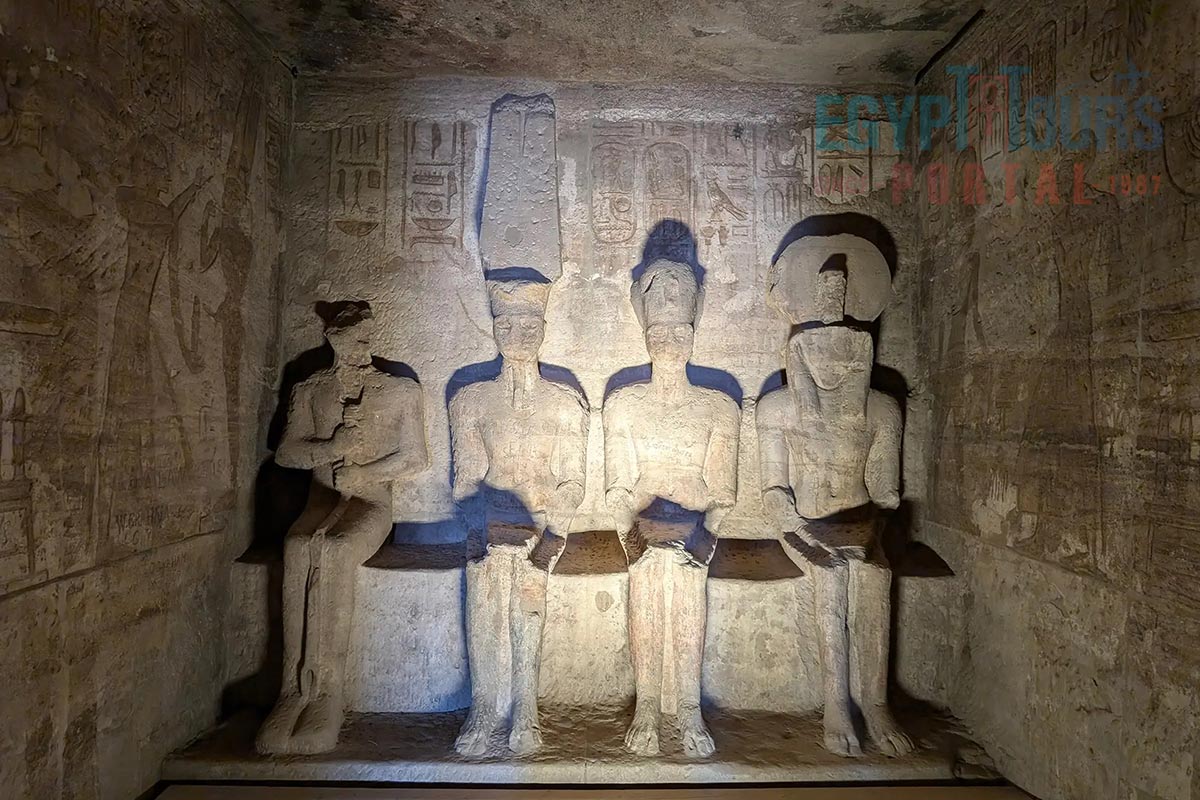
One of the most magical features of Abu Simbel is the solar alignment of the Great Temple. The temple was designed so that twice a year, sunlight enters through the main doorway, travels deep into the temple, and illuminates the inner sanctuary. The light reaches the statues of Ra-Horakhty, Ramesses II, and Amun-Ra, while the statue of Ptah, associated with the underworld and darkness, remains unlit.
This phenomenon is traditionally celebrated on February 22 and October 22 every year. These dates are commonly associated with Ramesses II’s coronation day and birthday, although direct evidence for this exact interpretation is debated. Some calculations suggest that the original ancient date may have been connected with the heliacal rising of Sirius / Sothis or another significant ritual moment. The temple’s relocation and the effects of axial precession mean the modern alignment may not be exactly identical to the original ancient one, but the effect remains one of the most extraordinary examples of ancient Egyptian architectural astronomy.
The event is known as the Abu Simbel Sun Festival. Thousands of visitors gather before sunrise to watch the first rays of sunlight penetrate the temple and illuminate the sanctuary. The celebration often includes ancient Egyptian entertainment of music, dance, Nubian cultural performances, and a powerful atmosphere that connects modern visitors with the scientific, spiritual, and artistic genius of ancient Egypt.
Discover the Purpose and Significance of Abu Simbel Temples
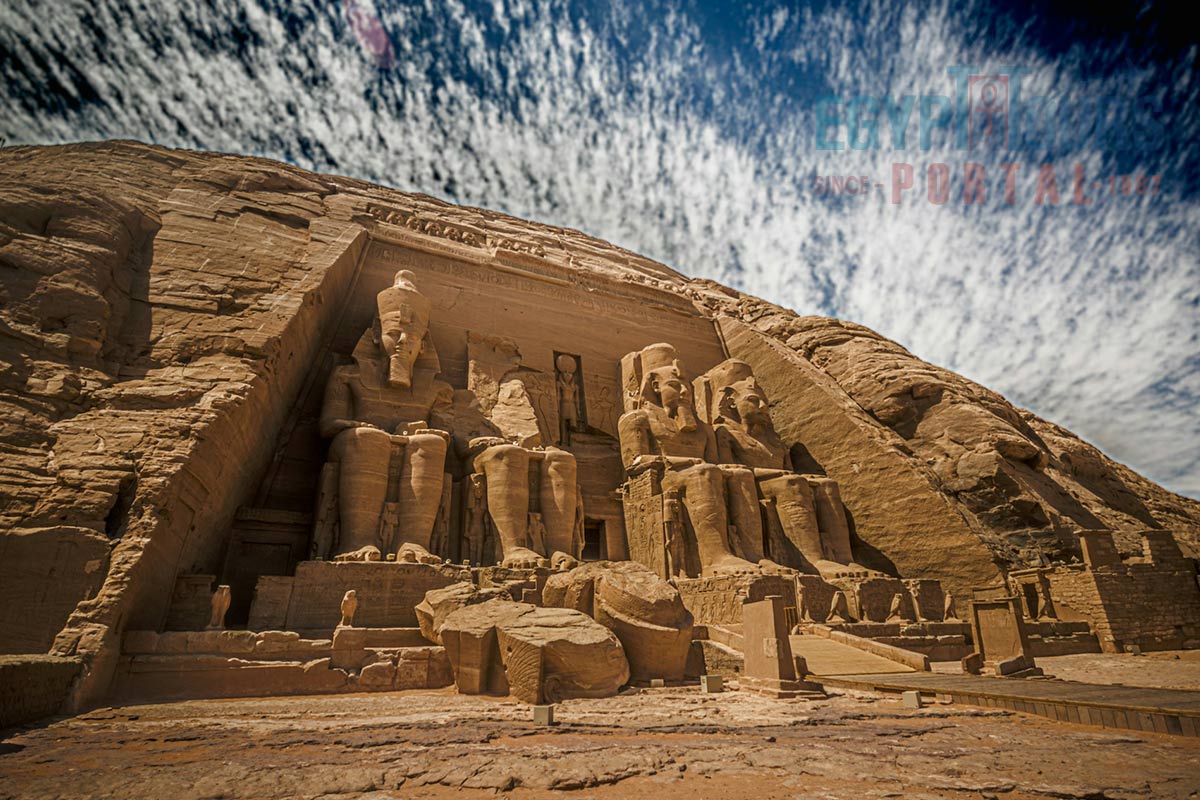
Abu Simbel was built for several connected purposes: religious worship, royal glorification, political propaganda, frontier control, and eternal memory. Religiously, the Great Temple honored Amun, Ra-Horakhty, Ptah, and the deified Ramesses II, while the Small Temple honored Hathor and Queen Nefertari. This made the complex a sacred space where royal authority, divine protection, and cosmic order were visually united.
Politically, Abu Simbel stood near Egypt’s southern frontier with Nubia, a region rich in gold and important trade goods. By carving massive temples into the rock at this border zone, Ramesses II sent a clear message to Nubians, travelers, officials, nobles, and foreign powers: Egypt was powerful, divinely supported, and permanently present. The four colossal statues on the façade were not only devotional art; they were statements of imperial authority.
Historically, Abu Simbel is significant because it commemorates Ramesses II’s kingship and military identity, especially through reliefs of the Battle of Kadesh, one of the most famous battles of the ancient world. Artistically, it is one of the greatest achievements of rock-cut Egyptian architecture. Astronomically, its solar alignment shows the advanced planning and symbolic intelligence of ancient Egyptian architects. Culturally, the Small Temple’s nearly equal representation of Nefertari beside Ramesses II makes it one of the most important monuments for understanding royal women in Egyptian art.
Modern Abu Simbel is equally important because its relocation became a symbol of international cooperation in heritage preservation. Saving the temples proved that world heritage could be protected through global action, technical expertise, and cultural responsibility.
The Incredible Facts of the Golden Abu Simbel Temples
- The Abu Simbel Temples are located in Aswan Governorate, Upper Egypt, near the border with Sudan, on the western bank of Lake Nasser, about 230 km southwest of Aswan and around 300 km by road.
- They were carved in the 13th century BC during the reign of Ramesses II and were likely built between 1264 BC and 1244 BC.
- The complex includes two temples: the Great Temple of Ramesses II and the Small Temple of Hathor and Nefertari.
- The Great Temple is dedicated to Amun, Ra-Horakhty, Ptah, and the deified Ramesses II.
- Its façade has four seated statues of Ramesses II, each around 20 meters high, while its inner sanctuary contains statues of Ra-Horakhty, Ramesses II, Amun-Ra, and Ptah.
- The Small Temple is dedicated to Hathor and Queen Nefertari and is famous because Nefertari’s statues are nearly equal in size to Ramesses’ statues, a rare honor in ancient Egyptian art.
- The temples were rediscovered in 1813 by Johann Ludwig Burckhardt, entered by Giovanni Belzoni in 1817, and fully cleared of sand in the early 20th century.
- They were relocated in 1968 to save them from the rising waters of Lake Nasser after the Aswan High Dam project.
- The relocation involved cutting the temples into 1,036 blocks, moving them higher and farther inland, and rebuilding them under artificial hills.
- Abu Simbel is famous for its solar alignment, celebrated on February 22 and October 22, when sunlight reaches the sanctuary and illuminates three statues while leaving Ptah in darkness.
- The site has a hot desert climate, receives virtually no rainfall, and can be reached by road from Aswan, by air through Abu Simbel Airport, or by Lake Nasser cruise.
- It also appears in popular culture, including the films Death on the Nile and The Mummy Returns.
Enjoy the Most Amazing Tours to The Abu Simbel Temple
Abu Simbel temple is one of the most historical attractions around the world, where many tourists dream of exploring, so if you want to visit this magnificent monument and the other archaeological sites, then you can visit our breathtaking Egypt vacations or Nile river cruises and choose your most suitable journey to Egypt.